
 JYSK Delivery Service
 Become a Driver
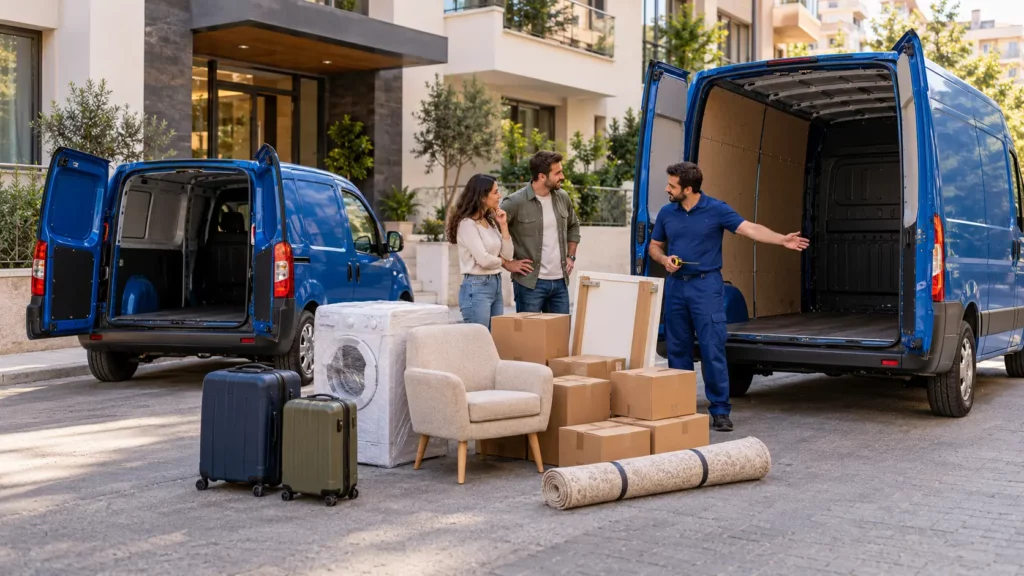
A small-scale move is a practical transportation model that involves moving a few boxes, one or two appliances, a sofa, a bed, a desk, or personal belongings to another address without needing to move an entire house. This type of move might be necessary when moving out of student accommodation, buying second-hand furniture online, sending appliances to a relative, or storing unused household items. While having fewer items makes the process easier, choosing the wrong vehicle can turn what seems like a small move into something more difficult and costly than expected.
When choosing a vehicle for transporting a small amount of goods, simply looking at the number of items is not enough. While two boxes and a washing machine numerically constitute three items, as do three chairs, the weight, volume, packing needs, and placement within the vehicle are completely different for these two loads. Therefore, the correct vehicle selection should be made by evaluating not only the number of items but also their dimensions, weight, shape, and fragility.
Light commercial vehicles like the Doblo may be sufficient for a limited number of boxes and small pieces of furniture. For longer or bulkier furniture, multiple appliances, or large items like sofas, a panel van can be preferred. If the amount of goods is slightly larger, or if all items need to be transported without being compressed, a pickup truck can be considered. The important thing is not to choose the smallest vehicle, but to select one that allows the goods to be placed upright, stable, and securely.
What is a Small Item Transport?
"Small item" refers to moving services that don't encompass the entire household and generally involve transporting items of limited volume. Examples include a sofa and a few boxes, a washing machine and a small table, a single bed and a desk chair, or personal belongings from a student's room. However, it's important to remember that the term "small item" doesn't mean the same thing to everyone. For one user, five boxes might be considered small items, while for another, it could refer to a sofa, a bed, a refrigerator, and ten boxes.
Therefore, simply stating "I have few belongings" in a moving request is not enough to determine the right vehicle. The name, approximate size, and quantity of each large item to be moved must be specified. The number and dimensions of boxes should also be added to the list. Sharing photos of your belongings can make it easier to understand the actual volume, especially for furniture.
The main difference between moving a small number of items and moving a full house is the scale of the operation. A full house move may require a large vehicle, a large moving team, furniture disassembly, packing, and a long loading time. For moving a small number of items, a more practical plan can be created using more compact vehicles such as a Doblo, panel van, or pickup truck, depending on the amount of cargo. However, if there are appliances, furniture, or sensitive electronic devices, professional packing and transportation procedures must be followed.
Why is choosing the right vehicle important when transporting small amounts of luggage?
The right vehicle ensures that all items can be moved in one go and with the proper arrangement. If the vehicle is chosen to be too small, the items may not fit, some items may need to be laid down or compressed, or a second trip may be necessary. In particular, transporting refrigerators, washing machines, televisions, and furniture with glass surfaces in an unsuitable position can increase the risk of damage.
If a vehicle larger than necessary is selected, the user may pay for a higher capacity than they need. One advantage of the small cargo transport service is the ability to choose a smaller transport vehicle suitable for the amount of cargo. To benefit from this advantage, the cargo information must be prepared correctly.
Not only the vehicle's total volume but also its door opening and interior height are important. A piece of furniture might theoretically fit inside the vehicle but could not pass through the rear door. Similarly, a standard appliance might fit in the vehicle's floor, but there might not be enough interior height to transport it upright. Therefore, the dimensions of the item and the vehicle's usable cargo space should be considered together.
Vehicle selection also affects the loading and unloading arrangement. The order in which items will be placed inside the vehicle, how much protective space will be left for delicate items, and how securing straps will be used should be considered in advance. Just because all items mathematically fit in the vehicle does not mean they can be transported safely.
How to Prepare an Inventory List Before Choosing a Vehicle?
The first step in planning a move with minimal belongings is to create a detailed inventory list. This list should include not only large furniture items but also boxes, suitcases, small appliances, and other items to be moved. Instead of simply stating "one sofa and a few boxes," a more accurate description would be "one three-seater sofa, one coffee table, six medium-sized boxes, and two suitcases."
When preparing a list, items can be divided into four main groups: furniture, appliances, electronics, and boxes. The furniture group might include sofas, beds, bed frames, desks, chairs, and bookshelves; the appliance group might include refrigerators, washing machines, dishwashers, and dryers; and the electronics group might include televisions, monitors, computers, and sound systems. Boxes can be classified according to their contents and size.
Whether large items can be disassembled should also be noted. If a desk has removable legs, it may take up less space in the vehicle. A bed with storage space may require more space if it is to be transported as a single piece. If a bookcase or wardrobe needs to be disassembled, the resulting long panels must be placed flat and securely inside the vehicle.
When estimating the number of boxes, don't forget personal items that haven't been packed yet. Books, kitchenware, and clothing can result in more boxes than initially estimated as they are packed. Separating as many items as possible and determining the approximate total number before placing a request will make it easier to choose the right vehicle.
How should the measurements of objects be taken?
The width, length, and height of furniture should be measured in centimeters. The outermost points of furniture should be taken into account; armrests, legs, handles, and protrusions should be included in the measurement. Measuring only the seat of a sofa can make the actual volume appear smaller than it is. For appliances, the door, control panel, and rear mounting protrusions should also be considered.
When measuring, the volume of the item after packaging should also be considered. Protective blankets, bubble wrap, corner protectors, and stretch film can add a few centimeters to the item. While this difference may seem small for a single item, it can become significant when multiple pieces of furniture are loaded into the same vehicle.
When disassembling furniture, both the assembled dimensions and the dimensions of the longest piece after disassembly can be recorded. For example, a table will take up less space when disassembled, but the long tabletop or legs must be suitable for the interior length of the vehicle. For products like beds and bed bases, thickness is as important as the dimensions.
If it's not possible to measure each box individually, they can be grouped as small, medium, and large. However, boxes of non-standard sizes should be specified separately. It should also be remembered that very heavy boxes can affect vehicle capacity and loading arrangements.
In what situations is using a Doblo suitable for transporting goods?
Doblo-type light commercial vehicles are a frequently used option for transporting small amounts of goods. They can be considered for loads with limited volume, such as a few medium-sized boxes, suitcases, chairs, a small table, or a standard appliance. The vehicle's compact structure can provide an advantage in terms of accessibility in narrow streets and busy urban areas.
When deciding to use a Doblo for transporting goods, the vehicle's actual cargo capacity should be considered. Even within the same class, the length of the cargo bed, interior height, and door opening can vary depending on the model. A vehicle with passenger seats may not have the same usable volume as a closed-body vehicle dedicated entirely to cargo transport.
A standard washing machine, dishwasher, or a limited number of boxes can be transported in most suitable light commercial vehicles. However, appliances must stand upright, be secured with straps inside the vehicle, and have sufficient protective space around them. Just because an item physically fits in a vehicle does not automatically mean it can be transported safely.
The Doblo may be insufficient for bulky loads such as large corner sofas, spacious wardrobes, double beds, and numerous boxes. Furthermore, if multiple appliances need to be transported together, it may not be possible to place them all upright. In such a case, opting for a panel van transport option might be more appropriate.
When Should Panel Vans Be Preferred for Transportation?
Panel vans offer a larger and higher cargo area than light commercial vehicles like the Doblo. They can be considered for transporting small items such as a sofa, a few appliances, disassembled furniture pieces, and numerous boxes. The larger interior volume is particularly advantageous in situations where items need to be placed without being tightly packed.
Panel vans can also be suitable for transporting long furniture. Disassembled wardrobe panels, beds, tabletops, and bookshelf parts can be more neatly arranged according to the interior length of the vehicle. It may be easier to leave separate protective space for delicate items such as televisions, mirrors, or glass tables.
However, the choice of a panel van shouldn't be based solely on the number of items. For example, a panel van isn't needed for three small boxes. On the other hand, a corner sofa and a double bed frame, which may seem insignificant, could necessitate a panel van due to their size. The actual dimensions of the items and the loading method should be considered when making a decision.
The fact that a panel van is wider doesn't automatically mean that items will be secure inside. Furniture can move around in the empty spaces. Therefore, protective blankets, securing straps, and anti-slip supports should be used. After selecting the vehicle, the correct loading arrangement needs to be established.
In what situations might a pickup truck be needed?
The phrase "a small amount of stuff" can sometimes encompass a larger volume than users anticipate. If you're moving a sofa set, refrigerator, washing machine, double bed, and numerous boxes, a small transport vehicle might not be sufficient. While such a load might not seem as large as a complete household load, it could exceed the capacity of a panel van and require a pickup truck.
A pickup truck can offer a more convenient loading area for transporting large furniture and multiple appliances together. It makes it easier to leave protective distances between items, to place heavy pieces evenly on the floor, and to position delicate items separately.
A larger vehicle doesn't always mean it's better. Whether the truck can access the address should also be considered. Narrow streets, gated community entrances, enclosed parking garages, or parking restrictions may prevent a large vehicle from approaching the building. Both load capacity and accessibility should be considered when selecting a vehicle.
Key Differences Between Doblo, Panel Van, and Pickup Truck
The main difference between a Doblo, a panel van, and a pickup truck is the usable load capacity. A Doblo is suitable for a limited number of small to medium-sized items. A panel van can be used to transport longer and bulkier furniture or multiple appliances. A pickup truck, on the other hand, can be considered for loads exceeding the minimum amount but still small enough for a complete house move.
A typical load for a Doblo might include a washing machine, a small table, a few chairs, and a limited number of boxes. For a panel van, a larger list could include a sofa, appliances, a desk, and various boxes. A pickup truck, on the other hand, might be more suitable for transporting a refrigerator, a bed, a sofa, and multiple pieces of furniture together.
These examples should not be considered a definitive guarantee of capacity. Furniture described under the same name may come in different sizes. A small two-seater sofa does not occupy the same volume as a wide, armrest sofa bed. The correct decision should be made by comparing the dimensions of the furniture and the actual interior capacity of the appliance to be used.
How to Choose a Tool for Home Appliances?
Household appliances, besides being heavy, are products that need to be transported upright and secured inside the vehicle. The size and weight of appliances such as washing machines, dishwashers, and refrigerators should be checked before choosing a vehicle. Refrigerators, in particular, may not fit upright in a small transport vehicle due to their height.
A Doblo van might be sufficient for a single standard washing machine. If a dryer or dishwasher is also to be transported along with the washing machine, a panel van might offer a more convenient layout. When a refrigerator is added to the list, a vehicle should be chosen that can secure all appliances upright and separately.
If boxes and furniture are placed alongside appliances, these items should not put pressure on the appliances. Heavy boxes should not be placed on top of appliances, and delicate electronic panels should not be overloaded. Cramming items together to fill the vehicle is not a proper loading method.
Besides choosing the right vehicle, preparation is also crucial. Appliances must be disconnected, any remaining water drained, moving parts secured, and the transport method must be followed according to the manufacturer's instructions. Even with the right vehicle, an unprepared appliance may experience problems during transport.
What precautions should be taken when moving sofas and beds?
Although they appear lightweight, car seats are pieces of furniture that take up a significant amount of space. The dimensions of the armrests and backrest should be compared to the vehicle's door opening. If the seat's legs or modular parts can be removed, the space it occupies in the vehicle can be reduced. However, it must be determined in advance who will perform the removal.
A single armchair or a small two-seater sofa may fit in some Doblo-type vehicles. A large three-seater sofa, sofa bed, or corner sofa may require a panel van. Whether the corner sofa can be separated into modules is a determining factor in vehicle selection.
Although a mattress is a thin product on its own, its large surface area requires special placement within a vehicle. Bending the mattress or placing heavy objects under it can damage its structure. If a bed base is to be transported, its height and width should be measured separately. Whether the bed base can be separated into two parts should also be considered.
Seats and beds should be protected with clean transport covers. When choosing a vehicle, not only the bare furniture dimensions but also the volume that will be created after packaging should be taken into consideration.
How do boxes affect vehicle capacity?
Although individual boxes may seem small, their numbers can significantly increase the vehicle's space. Especially when using large boxes, there may not be enough space left for furniture inside the vehicle. Therefore, the approximate number and dimensions of the boxes should be specified in the transportation request.
Heavy items like books and kitchenware should be distributed into smaller boxes. Filling a large box entirely with books will make transporting it difficult and may cause the bottom of the box to open. Lighter items like clothing and textiles can be placed in larger boxes.
Having boxes that are neat and of similar size makes stacking them in the vehicle easier. Open boxes, disorganized bags, and unpackaged small items take up more space than expected. All boxes should be sealed and labeled before moving day.
If the number of packages exceeds the initial figure, the selected vehicle may be insufficient. The actual number should be rechecked once packing is complete, and the transport plan updated if there are any significant changes.
When is transportation assistance needed?
Drivered vehicle service and door-to-door delivery support may not be the same thing. If the customer can load and unload their belongings themselves, vehicle service alone may suffice. However, if there are appliances, furniture, beds, or heavy boxes, delivery support may be needed.
When determining transportation assistance, the weight of the items, floor information, elevator availability, and the distance between the building and the vehicle should be evaluated. If the user does not have anyone to assist them, this should be clearly stated in the request.
Lifting heavy items by inexperienced individuals can pose a risk of both injury and damage to the items. Washing machines, refrigerators, and large pieces of furniture may require appropriate moving equipment and sufficient personnel. Choosing the right equipment is crucial, complemented by a proper team plan.
How to Plan a Small Item Move with a Moving Company?
When placing a small item transport order through our transporter, you enter the pickup and delivery addresses. Then, you select a vehicle based on the volume of your belongings. When considering options such as a Doblo, panel van, or pickup truck, you should take into account the dimensions of the large items to be transported and the total number of boxes.
Floor and elevator information for both addresses should be provided, and any long walking distance between the vehicle and the building should be explained. If assistance is required for loading and unloading items at the new address, the relevant service option should be considered.
The inventory list should be checked one last time before the order is completed. If there are any additional boxes, furniture, or appliances to be added later, the transport vehicle should be selected accordingly. If you are unsure about the measurements, you can take photos of the items and note their approximate dimensions.
The advantage of a smaller load transport service is that instead of a large organization suitable for a full house move, a vehicle can be selected according to the needs. For this, the information entered by the user must reflect the actual load.
Choosing the right vehicle for transporting a small amount of luggage isn't solely based on the number of items. The size, weight, shape, and placement of the items within the vehicle must all be considered. A small van like a Doblo might suffice for a few boxes, suitcases, chairs, or standard appliances. For a sofa, bed, multiple appliances, and more boxes, a panel van might be preferable. For significantly larger loads, a pickup truck should be considered.
Before selecting a vehicle, a detailed inventory list should be prepared, the dimensions of large items should be measured, and the volume that will result from packing should be taken into account. Although floor, elevator, building entrance, and parking conditions may seem independent of vehicle capacity, they affect team and time planning. It should also be determined in advance who will load and unload the items.
When placing an order for transporting a small number of items through my transporter, accurately entering the address, vehicle, items, and transport support information helps create a plan tailored to your needs. This ensures a transport plan that is appropriate for the load quantity, avoiding the need to select an unnecessarily large vehicle or cramming items into a small one.