
 JYSK Delivery Service
 Become a Driver
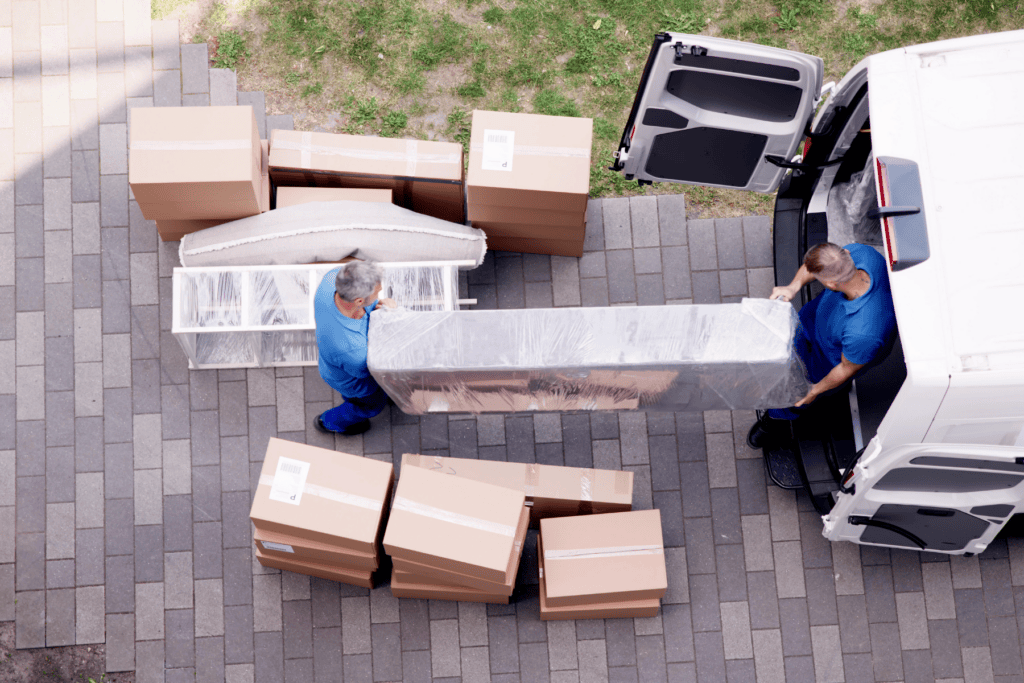
One of the most frequently asked questions during the house moving process is, "How many people will be enough?" Answering this question solely based on the number of rooms in the house isn't accurate. Even if two 2+1 apartments are the same size, the amount of items to be moved, the weight of the furniture, the building floor, elevator usage, and the distance of the vehicle to the building entrance can all be completely different. Therefore, the right house moving team should be determined based on the moving conditions, rather than the size of the house.
While a two-person team may suffice for some moves, others may require three, four, or more people. Heavy appliances, large sofas, wardrobes to be disassembled, high floors, and buildings without elevators can all increase the need for a team. Conversely, for a small 1+0 or 1+1 apartment with just a few boxes, a table, and some small furniture, a smaller moving team may be sufficient.
When selecting a moving team, the goal shouldn't be simply to complete the job with the fewest possible people. The main objective is to ensure the safe transport of belongings, to minimize unnecessary delays in the process, and to prevent workers from becoming physically overworked. An insufficient team can lead to longer moving times and increased risks with heavy items. Conversely, having too many people isn't always necessary.
Therefore, in a professional moving plan, the number of team members should be evaluated together with the amount and weight of the goods, building conditions, transportation distance, vehicle type, and additional services. In local moving solutions like those offered by Taşımacım, it's not just about vehicle selection, but also about accurately specifying the need for moving assistance.
How is a house moving team selected?
No single criterion is used when selecting a moving team. The number of rooms in the house is only a starting point.
The main determining factors are as follows:
- Total amount of items
- Large number of furniture items
- Number of household appliances
- Whether the furniture will be disassembled
- The floor on which the current house is located
- The floor where the new house is located
- Elevator status
- Stair width
- The distance between the vehicle and the building.
- Number of packages
- Delicate and heavy items
- How short the transport time needs to be.
Each of these variables affects the team size.
For example, a team of two can easily move a small one-bedroom apartment with few belongings. However, if the same apartment is on the fifth floor, has no elevator, and is full of heavy appliances, two people might not be enough.
Is the number of rooms sufficient on its own?
No. The moving team should not be selected solely based on whether the apartment is a "1+1, 2+1, or 3+1".
The number of rooms can give a rough idea of the density of belongings in a home. However, the actual moving volume varies from person to person.
A two-bedroom apartment is easier for someone living a minimalist lifestyle to move into than a one-bedroom apartment for someone with a lot of belongings.
Therefore, in team planning, the actual list of items is more important than the number of rooms.
For example, let's compare these two houses:
The first house contains a sofa, a bed, a table, a refrigerator, and eight boxes.
The second house contains two sofas, a large wardrobe, a double bed frame, a refrigerator, a washing machine, a dishwasher, a bookshelf, and twenty boxes.
Even if two houses have the same number of rooms, the team needed for the move may not be the same.
How many people are needed for a 1+0 or 1+1 apartment?
For studio or one-bedroom apartments with few belongings, a smaller moving team is usually sufficient.
A two-person team is often a viable option, especially if you have the following types of equipment:
- A bed
- Small armchair
- Desk
- Chair
- Several boxes
- Mini refrigerator
- small bookshelf
However, the number of team members may increase if there are heavy appliances, a large bed frame, or narrow stairs.
For example, carrying a washing machine and a standard refrigerator down the stairs from the fifth floor could be physically very difficult for two people.
Therefore, a small house doesn't always mean a small team.
How many people are needed for a 2+1 apartment?
In a medium-sized 2+1 apartment, a team of three can often be more functional.
These types of homes commonly contain the following items:
- Sofa set
- Dinner table
- TV unit
- Wardrobe
- Double bed
- A refrigerator
- Washing machine
- Dishwasher
- Many boxes
When moving with three people, one person can handle the arrangement of the vehicle and belongings while the other two carry items inside the building.
However, if the building is high up or there is no elevator, a fourth person may be needed.
How many people are needed for a team to prepare a 3+1 or larger apartment?
In 3+1 and larger houses, the amount of furniture usually increases.
You may find boxes containing living room furniture, bedroom sets, children's room furniture, workspaces, appliances, and more.
For this type of move, a team of three or four people may be more suitable.
Especially:
- If there is more than one wardrobe
- If there is a large corner sofa
- If there are many household appliances
- If there is no elevator
- If the vehicle cannot approach the front of the building
- If the transport will be completed on the same day
Increasing the number of team members could be considered.
In crowded homes, insufficient staff can significantly prolong transportation times.
How does the weight of the equipment affect the number of crew members?
Weight is just as important as the quantity of items.
Ten light boxes and a heavy refrigerator do not constitute the same load.
Heavy items should generally be carried by at least two people.
In some cases, three people may be needed.
Especially:
- Large refrigerator
- Washing machine
- Dryer
- Solid wood table
- Piyano
- Large base
- Heavy seat
- Marble table
- Large case
The number of team members can be increased for products like these.
Carrying heavy objects alone is risky for both the object and the person.
How many people are needed when moving household appliances?
Household appliances are an important factor in planning a home moving team's schedule.
Refrigerators, washing machines, and dishwashers are heavy and bulky appliances.
Under standard conditions, it may require two people to carry it.
However, three people might be safer on stairs without an elevator, in a narrow corridor, or over a long distance.
The grip points are just as important as the weight of the appliance.
For example, a large refrigerator can be difficult to balance on stairways.
Therefore, as the number of household appliances increases, the need for equipment may also increase.
Do Large Chairs Affect Crew Size?
Yes. Large sofas can be one of the most challenging parts of the house moving process.
Three-seater sofas, corner sofas, or sofa beds, in particular, are bulky and heavy.
Even if the legs are removed, the body can remain in one piece.
Changing the direction of the chair becomes difficult on narrow staircases.
Therefore, more than two people may be needed when moving a large sofa.
Two people can support the weight while one person controls the seat's direction.
How many people are needed to move a wardrobe?
If the wardrobe can be disassembled, it will be easier to transport.
The panels can be transported individually.
In this case, two people might be enough.
However, if the wardrobe needs to be moved without being disassembled, the number of people required may increase.
Especially with large, heavy, and mirrored wardrobes, a team of three might be safer.
Sliding doors and mirrored panels also require delicate handling.
How Does the Number of Floors Affect Team Requirements?
As the number of floors increases, the transportation time and physical load also increase.
A ground-floor apartment and a fifth-floor apartment without an elevator do not require the same equipment.
Two people constantly carrying items to high floors can get tired quickly.
A team of three or four people can take turns doing the work.
This increases both speed and safety.
The number of layers is a significant factor, especially for heavy appliances and large furniture.
If there is an elevator, will fewer people be sufficient?
In most cases, yes.
The elevator greatly reduces the need to climb stairs.
However, the size of the elevator is important.
A chair or wardrobe might not fit in a small building elevator.
In this case, large items still have to be carried up the stairs.
In modern buildings equipped with freight elevators, a smaller team may suffice.
Using an elevator can also shorten transportation time.
How many people are needed if there is no elevator?
Increasing the number of staff is generally more sensible in buildings without elevators.
Especially when moving to the third floor or higher, a two-person team can have difficulties.
If heavy items need to be moved, three or four people might be more suitable.
Team size is important not only in terms of physical strength, but also to reduce the need for breaks.
While one person rests, the others can continue carrying.
Do narrow staircases increase the need for a team?
Yeah.
Moving objects and maintaining balance is more difficult on narrow staircases.
Some furniture has to be rotated around the landing.
In this situation, an additional person can provide guidance and support.
A three-person set might be more advantageous, especially for long wardrobe panels, large headboards, and sofas.
Why is the distance between a vehicle and a building important?
If the delivery vehicle cannot reach the building entrance, the items will have to be carried by hand over a longer distance.
This situation directly affects the team's needs.
For example, if the vehicle is parked in front of the building, two people might be enough.
However, if the vehicle remains 100 meters away, the same two people will spend much more time and energy.
A team of three or four people can be more efficient over long transportation distances.
Pedestrian walkways within the site, narrow streets, and parking restrictions are particularly important in this regard.
How to Plan a Moving Team Within the Site?
In some residential areas, delivery vehicles cannot reach the front of the building.
The vehicle may remain at the site entrance or in a designated loading area.
In this case, items are carried by hand over long distances.
Additionally, there may be specific hours for the use of the freight elevator within the site.
Under these circumstances, the number of team members can be increased.
It is important to obtain information from the site administration beforehand.
Are more people needed to shorten the transport time?
Usually yes.
However, productivity doesn't always increase proportionally as the number of team members increases.
For example, having five people in a small one-bedroom apartment might not be necessary.
In narrow corridors, too many people can obstruct each other's movement.
The most efficient team is the one with a size appropriate to the equipment and building conditions.
In large houses, a team of four can perform different tasks simultaneously:
One person will disassemble it.
Two people carry the goods.
One person makes adjustments inside the vehicle.
This way the process can move faster.
If the packing is ready, could fewer people be sufficient?
Yeah.
A house moving team doesn't just transport belongings. The need for a team may increase if tasks like packing, dismantling, and assembly are also required.
If all the boxes are packed, the furniture disassembled, and the appliances ready for transport, a smaller team may suffice.
However, if the team needs to do both packing and transporting on the same day, more people may be needed.
Therefore, it's important to clearly state what's ready before moving.
How does it affect the number of disassembly and assembly teams?
If furniture such as wardrobes, tables, beds, and bookshelves need to be disassembled, one person can handle those tasks while the others carry out the transportation.
Especially in large houses, this division of labor saves time.
The process will take longer if one person handles both disassembly and transportation.
Therefore, the number of team members can be increased for moves that include assembly and disassembly services.
Does the number of packages affect the team requirements?
Yeah.
If the number of boxes is very high, the moving time will be longer.
For example, there is a big difference between ten boxes and forty boxes.
More people may be needed if the boxes are heavy and large.
Book boxes, in particular, can be very heavy.
The number of boxes must be specified in the house moving team's plan.
Why Do Books and Archival Items Create Additional Burden?
Although the books appear small in size, they are very heavy.
If there are many books in a house, moving them becomes physically more difficult as the number of boxes increases.
Additional staff may be helpful in this situation.
The books should be placed in small boxes, and the boxes should not be excessively heavy.
Should the number of staff members be increased for families with children?
It can increase indirectly.
Houses with children usually have more belongings.
Children's room furniture, toys, books, and additional boxes can increase the transport volume.
Family members may also need to look after the children during transport.
In this situation, the likelihood of users providing physical support to the team decreases.
A professional team takes on more work.
If the user is providing transportation assistance, can the number of team members be reduced?
In some cases, yes.
However, professional assistance should not be avoided for heavy items.
The user can carry lightweight packages.
However, lifting heavy items like refrigerators, washing machines, bed frames, and large sofas is risky for inexperienced individuals.
Therefore, user support should only be considered for light tasks when developing a team plan.
What is the difference between professional team support and help from friends?
Friend support can be helpful for minor moves.
However, a professional team can better manage how to transport heavy items, handle stair turns, and arrange them inside the vehicle.
Especially when dealing with large furniture and appliances, an experienced moving company can provide a safer experience.
Help from friends can be considered for packing boxes and lightweight items.
How does the moving crew divide tasks inside the vehicle?
In a professional moving process, team members can take on different roles.
One person manages the arrangement of items inside the vehicle.
Others move furniture out of the apartment.
One person can disassemble it.
This division of labor shortens transportation time.
Interior layout is particularly important.
Heavy items should be placed in a balanced manner, and fragile items should be kept in a safe area.
What are the consequences of having the wrong number of team members?
An insufficient team can cause various problems.
The transportation time will increase.
The risk increases with heavy objects.
Employees tire more quickly.
Furniture can move unsteadily during transport.
Safety on stairs may decrease.
Vehicle waiting times may increase.
Installation in the new house may be delayed.
Having too many teams isn't always an advantage.
In small homes, too many people can limit movement space.
Therefore, the right balance is important.
Can the number of team members change on the day of the move?
Unexpected circumstances may arise on the day of transport.
For example, the building's elevator might be broken.
The vehicle may not be able to approach the building.
More packages than expected may arrive.
Furniture may not be transportable without being disassembled.
In this case, the team requirements may change.
Therefore, providing accurate information before the move is important.
Can photos of items help determine the size of the team?
Yeah.
Photographs provide more accurate information about the size and density of the object.
Photos of large furniture, wardrobes, and appliances can be particularly helpful.
Using photos along with the inventory list makes team planning easier.
How many people are needed to move a small amount of furniture?
When moving a small amount of furniture, two people are usually enough.
For example:
- A bed
- A table
- A chair
- Five boxes
- small bookshelf
In most cases, a two-person team is sufficient for an item list like this.
However, even if there are only a few items, the number of team members can be increased if there is a refrigerator or a heavy bed frame.
How many people are needed to install a few pieces of household appliance?
For a few heavy appliances like refrigerators and washing machines, two people might be the minimum.
If the building is tall and has no elevator, three people might be safer.
Especially if the stairs are narrow and long, having an extra person can be helpful in terms of balance and guidance.
How many people are needed for a 1+1 single-person apartment?
Single-person apartments generally have minimal furnishings.
A team of two is often enough.
However, if there is a large sofa, a double bed frame, and appliances, it can accommodate three people.
How many people are needed for a student house?
When moving from student housing, the amount of belongings is usually limited.
If you have a few boxes, a table, a bed, and a mini-fridge, two people might be enough.
However, if items need to be collected from different addresses, the moving time will be longer.
In this case, the team and vehicle plan may need to be re-evaluated.
What is the most suitable team size for high-rise buildings?
For high-rise buildings without elevators, a team of three or four people may be more suitable.
Increasing the number of team members makes the move easier, especially if there are appliances and large furniture items involved.
If there is a freight elevator, a smaller team may be sufficient.
What to Consider When Choosing a House Moving Team?
Experience is just as important as team size.
More people don't always lead to better results.
Two experienced people can be more efficient than four inexperienced people in some small moves.
Therefore, in the team plan:
- Type of item
- Team experience
- Vehicle capacity
- Building conditions
- Shipping time
should be evaluated together.
How to prepare your home before the moving team arrives?
The process will go faster if the house is ready when the team arrives.
The boxes must be sealed.
The furniture interiors should be emptied.
Household appliances should be prepared.
Personal belongings should be separated.
The area around the furniture to be disassembled should be cleared.
The parking space for the vehicle should be checked.
Elevator use should be planned.
These preparations ensure more efficient use of team resources.
What can be done to make the job of the moving team easier?
On moving day, small preparations make a big difference.
It is important to leave the hallways clear.
The doors must be opened completely.
The boxes should be grouped by room.
Fragile products must be labeled.
Children and pets should be kept away from the transport area.
Building management should be informed.
This way, the team avoids unnecessary waiting.
The number of people needed for a house move cannot be determined solely by looking at the number of rooms in the house.
Choosing the right moving team should be planned by considering the amount and weight of items, number of floors, elevator availability, vehicle distance, and the density of appliances.
A two-person team might be sufficient for a sparsely furnished one-bedroom apartment.
A team of three might be more suitable for a 2+1 apartment with large furniture and appliances.
For 3+1 and larger homes, a team of three or four people may be considered.
However, high floors, buildings without elevators, narrow staircases, and long vehicle distances can increase the need for a team.
Household appliances are particularly important. Heavy items like refrigerators, washing machines, and dishwashers may require at least two people to carry them.
Large furniture items such as sofas, bed frames, and wardrobes also directly affect the team layout.
Having the packing and disassembly completed beforehand can enable faster transport with a smaller team.
When creating an intra-city moving plan through your moving company, you must accurately share the list of items, measurements, floor information, elevator availability, and any need for moving assistance.
This information helps determine both the right tool and the right team needed.
The goal of a house move isn't to complete the job with the fewest people possible, but to do it safely, efficiently, and without unnecessary delays.
When the correct team size is determined, both the safety of the goods, the moving time, and the physical workload can be managed more effectively. How many people should be in the house moving team? Find out the team needs based on the weight of the goods, the floor, elevator availability, vehicle distance, and appliances.