
 JYSK Delivery Service
 Become a Driver
The shopping ends, the real process begins afterwards.
When you walk into a furniture store, everything looks quite appealing. A new sofa, a more functional dining table, a stylish TV unit, or a bookcase you've been thinking about replacing for a long time… Choosing the product, imagining how it will look in your home, and the idea of renovating your living space is often quite exciting. When people buy new furniture, they aren't just buying an item; they're buying a new arrangement, a new atmosphere, and often a more comfortable living space in their home.
However, this enjoyable experience in the store can evolve into something completely different after leaving the checkout. Because for many users, the most difficult part of shopping isn't choosing the product. The real problem arises when they start thinking about when and how to get that product home.
In most stores, the delivery process follows standard procedures. There are specific days, certain time slots are offered, dates are given depending on the workload, and sometimes the user only has to choose from these dates. At this point, many people say the following:
"I bought the product, but why am I waiting days to use it?"
This is precisely the question that gives rise to the idea of having your store-bought furniture delivered home without delay. Because for the modern consumer, shopping is no longer just about the moment of purchase. The quick and planned delivery of the product to your home is also part of the experience.
The topic nobody wants to talk about when buying furniture: Waiting for delivery.
When it comes to furniture shopping, people usually talk about the model, color, size, and price. However, one of the most important factors that truly influences the purchasing decision is often delivery. Because no matter how beautiful a product is, if it doesn't arrive when you need it, the shopping experience doesn't feel complete.
For users living in large cities in particular, time is of the essence. People don't want to wait days for a product they've bought from a store, because often that product is part of a real need. The old sofa may have already been sold. They may have bought missing furniture for a new house. They may be rearranging the living room. They may need a desk or bookshelf immediately. In such cases, a delivery being delayed by several days can create not just a minor delay, but a disruption affecting the entire living space.
Waiting for delivery also brings other problems. It's unclear when the new furniture will arrive, the question of when the old furniture will be removed remains unanswered, plans made for the new home are delayed, and the user cannot truly relax after the purchase. Therefore, delivery of furniture purchased from a store is no longer a secondary detail; it's one of the central issues in the decision-making process.
Why is the phrase "Earliest delivery next week" so annoying?
Almost everyone who hears this sentence feels the same thing at first: disappointment. Because when the customer goes to the store, they see the product, like it, decide, and buy it. In their mind, that product has now found its place in the home. The empty space in the living room is filled, the table integrates with the kitchen, the new TV unit is placed against the wall. But the system in the store often fails to keep up with this speed of the customer.
Delayed delivery by several days, or sometimes even a week, doesn't just create waiting time; it also disrupts household planning. Users often don't know when to get rid of their old appliances, nor can they make space for the new one. Sometimes they have to plan their home life around the delivery date, and other times the initial enthusiasm for the new product dissipates during the waiting period.
This discomfort becomes particularly pronounced in purchases where quick decisions are made. For example, you might go to the store "just to look" and find exactly the armchair you're looking for. You want to buy it immediately. But if delivery is delayed for a few days, the excitement of the purchase isn't fully realized. Because the purchase has been made, but the product isn't yours yet; it has simply become a paid-for, waiting period.
Choosing furniture is easy, why is bringing it home so difficult?
Furniture moving is one of the most underestimated aspects of daily moving. Many people assume that after purchasing items from a store, the moving process is the store's responsibility. However, store delivery isn't always fast, flexible, or tailored to the customer's needs. In such cases, most people try to find their own solution. And that's where a new problem begins.
Transporting a chair, table, bookshelf, or TV unit home in your own vehicle is often not as easy as it seems. This is because furniture:
- is wide
- is bulky
- It is difficult to install inside the vehicle.
- It is susceptible to scratches and impacts.
- Sometimes in one piece, sometimes in disassembled form, but they still take up a lot of space.
Especially when trying to transport items in passenger cars, the following classic scenarios arise: the trunk isn't big enough, the back seats aren't sufficient, the items won't fit through the door, the product is at risk of damage, and the user eventually reaches the point of saying, "I wish I had solved this differently from the beginning."
So the problem isn't actually about buying the product from the store. The problem is the lack of a system to ensure that the product is transported to the user in a suitable manner.
Why are users who don't want to wait looking for alternative solutions?
Consumer habits today have changed significantly compared to the past. People no longer only look at the quality and price of a product; they also care about how quickly they can start using it. Especially in the digital age, the habit of instant access has increased so much that people have become less tolerant of long waiting times, even for large purchases like furniture.
There are several main reasons why users who don't want to wait might look for alternative solutions:
The first is that the need is genuine. A user doesn't buy furniture simply because they like it; often, they buy it because they genuinely need it. The old sofa is uncomfortable, the desk is inadequate, there's a lack of storage space, or their work routine has changed. Therefore, instead of buying the product and waiting, they want to use it immediately.
Secondly, there's planning. If a user is renovating their home, the absence of one piece can affect the entire layout. Old items can't be removed before new ones arrive, or vice versa.
The third is psychological satisfaction. When a person buys something, they want to incorporate it into their life. Long delivery times delay this feeling of satisfaction after the purchase.
This is why same-day shipping, fast transportation, and flexible delivery solutions are becoming increasingly popular.
What is the difference between store pickup and same-day delivery?
The fundamental difference between these two methods is not so much speed as the sense of control. In store delivery, the process generally follows the store's system. The customer chooses from the dates offered. Delivery times may be tied to specific intervals. The process may take longer if there is high demand. In short, control is largely with the store.
With same-day delivery, the user wants to tailor the process to their own needs. If they bought the product today, they want it delivered to their home today. Because what's important to them isn't just the delivery, but that it fits their schedule.
Here are the key differences from the user's perspective:
- Waiting time is shortened.
- Home planning becomes easier.
- The removal of old equipment and the arrival of new equipment are better coordinated.
- The shopping experience feels more holistic.
In short, same-day delivery isn't just about speed; it also gives the user control over their time and schedule.
Which furniture items purchased from stores most commonly cause problems?
Some products may seem small, but they are difficult to transport. Others require logistics from the start. The product groups that most frequently cause problems when trying to take them home from the store are:
Armchairs and Seating Sets
Sofas are among the most frequently replaced items in home decor. However, they are also among the most difficult to move. Due to their size and volume, transporting them in passenger vehicles is almost impossible.
Dining Table and Chairs
Although the table appears to be a single piece, it takes up a lot of space. Especially if the tabletop is wide, the transportation process requires serious planning. The load increases further when chairs are added.
TV Unit and Bookcase
Because they are long and have delicate surfaces, these products are susceptible to scratches. Furthermore, balanced placement during transport is important.
Wardrobes and Storage Units
Even when disassembled, the parts are large. They need to fit safely into a single vehicle.
Small White Goods and Home Appliances
Mini refrigerators, washing machines, dishwashers, and large kitchen appliances are also frequently moved after grocery shopping. Because they are heavy and delicate, they require careful handling.
The common characteristic of these products is this: they are easy to take out of the store, but difficult to get home with.
Why Trying to Transport It Yourself in Your Own Vehicle Is Not a Good Idea?
This thought is very familiar to many people: "I'll get it somehow, soon enough." However, in practice, this thought often results in wasted time, stress, and exhaustion.
Firstly, the interior space of passenger vehicles is not suitable for transporting furniture. Even if the rear seats are folded down, the height, width, or length of the item will pose a problem. Secondly, the item must be securely placed inside the vehicle. Otherwise, it may be scratched, damaged, or lose its balance during transport.
Furthermore, moving furniture isn't just about loading it into a vehicle. It also requires parking the vehicle at the store exit, carefully loading the items, unloading them again upon arrival at the house, and often moving them around the apartment building. This can turn what might seem like a few minutes of work into a physically demanding task lasting hours.
So, while transporting goods with your own vehicle may sometimes seem advantageous in terms of cost, it is often not efficient in terms of time, effort, and risk.
This is where my transporter comes into the picture.
The need to bring furniture home immediately after purchasing it from the store is leading users to seek faster and more flexible solutions. This is where the partial furniture transport approach comes to the fore. Because the user doesn't need a complete house move service; they only want to transport a specific piece of furniture, with the right vehicle, at the right time.
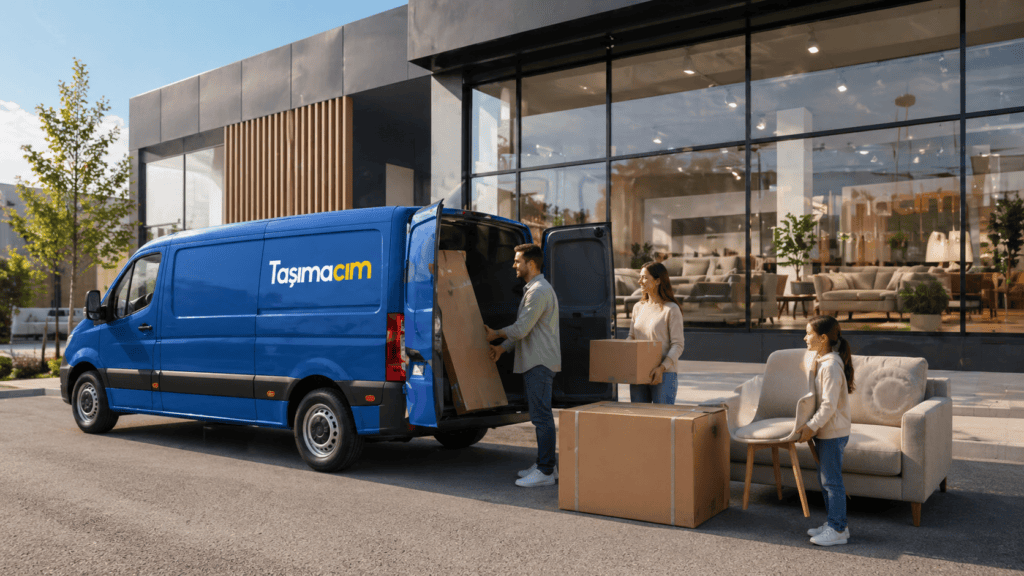
Systems focused on transporting individual items within the city, like Taşımacım , therefore become very meaningful for the user. The process can be managed more directly, instead of long phone calls, receiving different quotes, or uncertain waiting times. After purchasing the product, the user enters their address information, selects the appropriate vehicle according to the size of the item, and plans the process by seeing the price.
This approach offers a significant convenience, especially for users who shop in-store and don't want to wait for delivery. This is because the system is tailored to the user's needs, not the store's speed.
Why Choosing the Right Tool Changes the Entire Experience?
One of the most critical decisions when buying furniture from a store is choosing the right vehicle. The smooth progress of the transport process largely depends on it. While more compact solutions may suffice for small to medium-sized items, larger vehicles are needed for sofas, tables, or large storage units.
At this point, vehicle variety becomes important. Smaller products that won't fit in a passenger car require more practical solutions, while larger products may require more sensible options like panel vans or pickup trucks. The most important thing for the user is not having to make a second plan for transporting the product home.
When the right tool is selected:
- The product can be transported in one go.
- time loss is reduced
- The risk of damage decreases.
- The process is much less tiring.
So here, the vehicle is not just a means of transportation, but a defining element that complements the shopping experience.
What is the biggest advantage of having your order delivered to your home the same day?
The biggest advantage is that the home delivery process isn't disrupted. When people buy a product, they want to start using it immediately. This is especially important for purchases related to decoration or necessities. Thanks to same-day delivery, the user not only receives the product but also incorporates it into their living space on the same day.
This has several important consequences:
- No gaps will form between old and new items.
- There will be no unnecessary clutter at home.
- The stress of waiting for delivery is eliminated.
- The user feels the return on their purchase decision immediately.
Therefore, same-day delivery isn't just a matter of speed. It's also a matter of satisfaction, comfort, and control.
Why is it smart to think about the transportation process from the start when buying furniture?
Many users think about delivery after making a purchase. However, the most efficient approach is to plan the delivery simultaneously with the purchase. This reduces the likelihood of surprises.
These questions should be considered from the outset:
- When will this product be available from the store?
- Which vehicle will he use to get home?
- If there are any old items, when will they be removed?
- Can the process be completed within the same day?
- Is the apartment building entrance, floor, and layout suitable for this?
When these questions are answered beforehand, the shopping process becomes much more controlled. Otherwise, the user starts thinking about logistics after purchasing the product, which can turn an enjoyable shopping experience into a complicated one.
Choosing furniture is great, but managing the process correctly is even more valuable.
Buying furniture from a store is often a pleasant experience. When people choose a new product, they envision a better arrangement and a more comfortable life in their home. However, for this dream to quickly become a reality, the transportation process must also be considered with equal care.
Because the way to get your furniture home without waiting isn't just about being fast; it's about proper planning, the right tools, and the right approach to transporting it. Longer waiting times diminish the shopping experience. Attempting to transport it yourself can make the process more difficult. But with a solution tailored to your needs and planned carefully, like transporting individual items, the shopping experience is truly complete.
In short, when you buy a piece of furniture, it's not just about liking it. It's about how quickly and seamlessly you can integrate that product into your life. And often, the real difference is made by that unseen process, from the moment you leave the store until it finds its place in your home.